Matthew Thompson, PhD Student and Research Fellow with the CG-IPTC
Sociology Department
The Graduate Center at the City University of New York
mthompson3@gradcenter.cuny.edu
Introduction
Social dominance theory distinguishes patriarchy from arbitrary-set hierarchies such as race (Sidanius and Pratto 1999). The Theory of Gendered Prejudice extends this insight, arguing that arbitrary-set oppression operates primarily through male coalitional aggression and disproportionately targets subordinate males (Sidanius et al. 2018). The Subordinate Male Target Hypothesis formalizes this claim: the correlation between subordinate-group membership and hierarchy-enhancing outcomes (e.g., lethal police violence) is substantially stronger for males than for females.
Data and Methods
Analyses use the Mapping Police Violence database (≈15,500 incidents, 2013–March 2026). Victims were grouped by the dataset’s exact race categories. Annualized rates per 100,000 were calculated using 2024 Census population estimates. Unknown-race cases were excluded from rates. Age analyses used the valid-age subset (n = 14,962).
Findings
Table 1. Police Killing Rates per 100,000 per Year by Race and Gender (2013–2026)
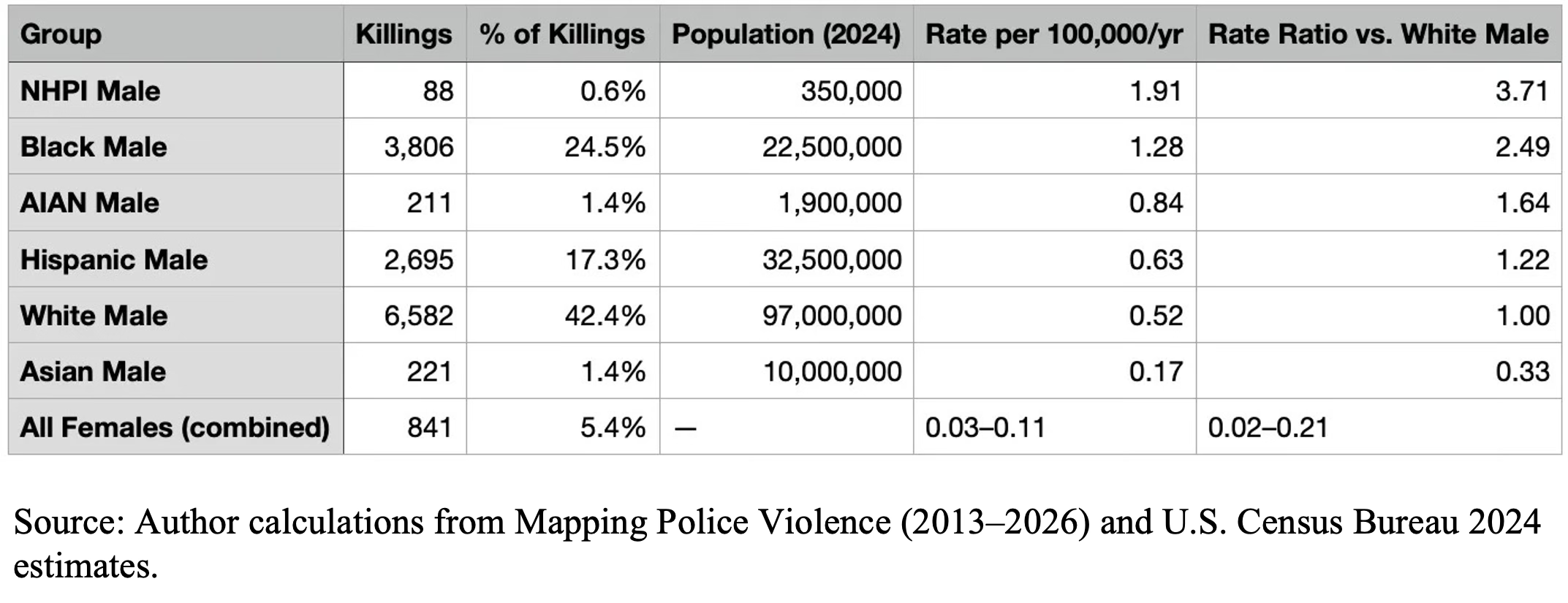
The table demonstrates a clear and dramatic gender-by-race interaction consistent with SMTH. Subordinate males from NHPI, Black, and AIAN groups face the highest rates (1.91, 1.28, and 0.84 per 100,000 respectively), 1.6–3.7 times higher than White males. Black males alone account for nearly one-quarter of all killings despite comprising only 6–7% of the population. In contrast, female rates across every racial category are near zero (0.03–0.11 per 100,000). This is not an additive “double jeopardy” pattern; rather, arbitrary-set oppression (racism) is overwhelmingly directed at males, exactly as predicted by the theory.
Figure 1. Rate Ratio vs. White Males
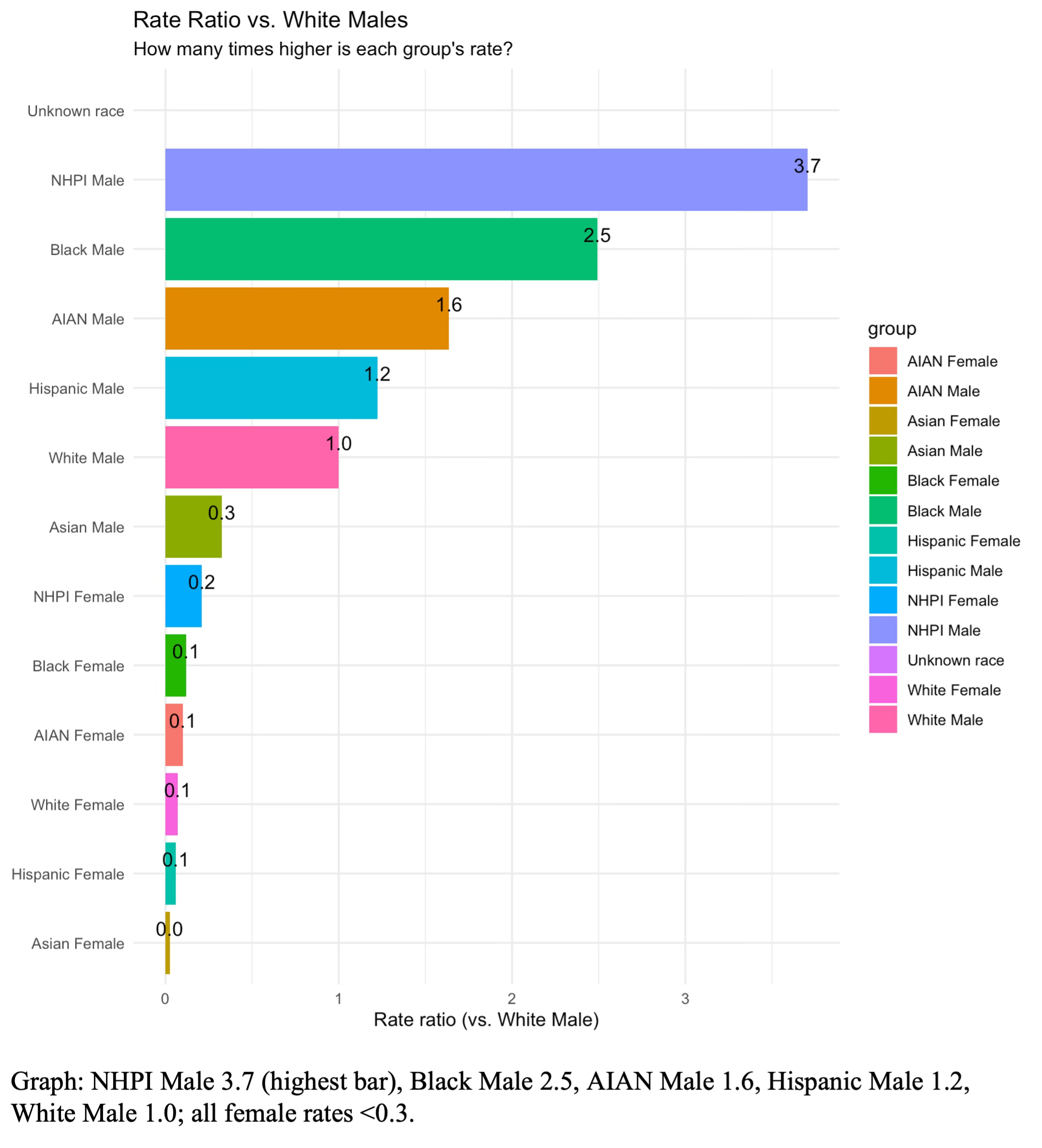
(How many times higher is each group’s rate?)
Figure 2. Annual Police Killing Rate per 100,000
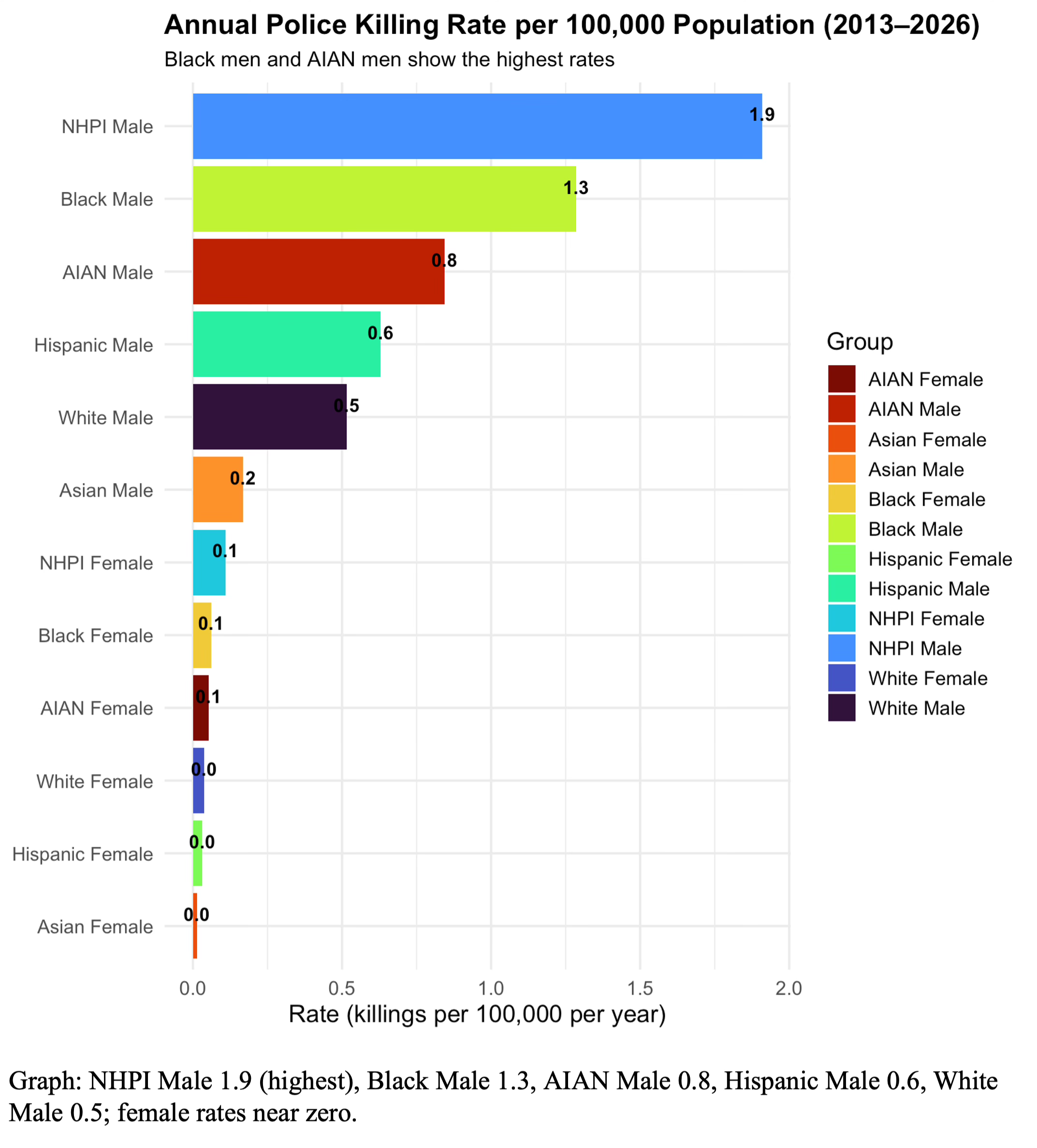
Figure 3. Age Distribution by Race and Gender
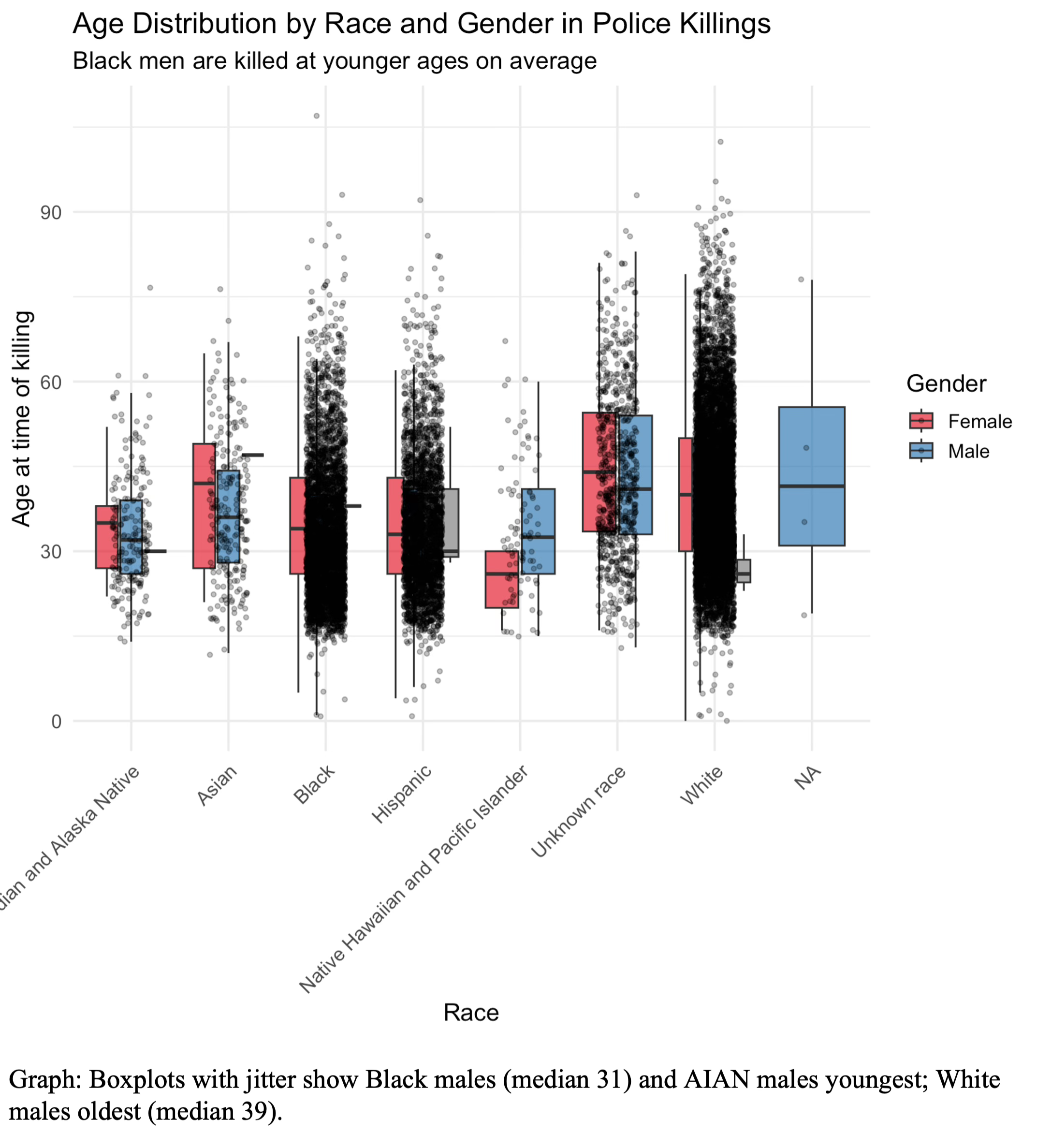
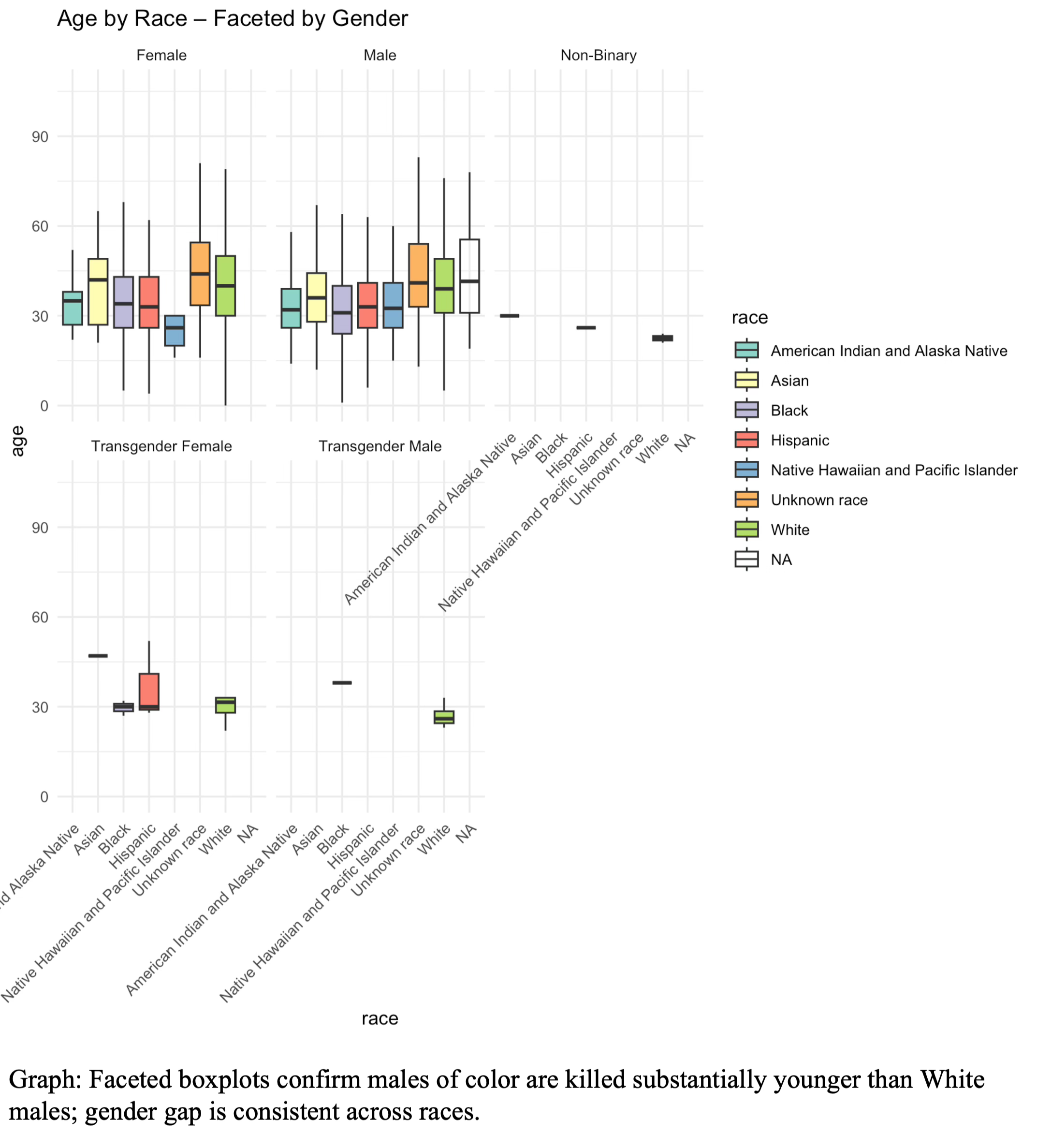
Figure 4. Age by Race – Faceted by Gender
Black males, AIAN males, and NHPI males are killed at the youngest average ages (≈33–34 years), 7–8 years younger than White males (mean 40.7). Black males in particular are killed at the youngest ages of any major group (median 31, mean 33.2). This age pattern reinforces SMTH: young subordinate males are perceived as the greatest coalitional threat and are prioritized for elimination, while early lethality among Black males underscores their heightened vulnerability to being killed at peak reproductive and social ages.
Discussion
The data conform precisely to the Subordinate Male Target Hypothesis (Sidanius et al. 2018). Subordinate males (Black, AIAN, NHPI) experience both higher absolute numbers and dramatically higher population-adjusted rates of lethal police violence. Female rates remain near zero across groups, contradicting additive “double jeopardy” models (Beale 2008; King 1988). Instead, the findings support the claim that racism and sexism are distinct hierarchical systems: arbitrary-set oppression targets males, while patriarchal control operates through different mechanisms (Sidanius et al. 2018).
Age patterns further align with the male warrior hypothesis component of the framework. The youngest Black and racialized males represent the peak perceived threat and are disproportionately eliminated. Statistical tests (Kruskal-Wallis, p < 2.2e-16 for race; χ², p = 0.022 for race × gender) confirm that these differences are not due...